
It isn't always measured in big steps - nor is it linear!
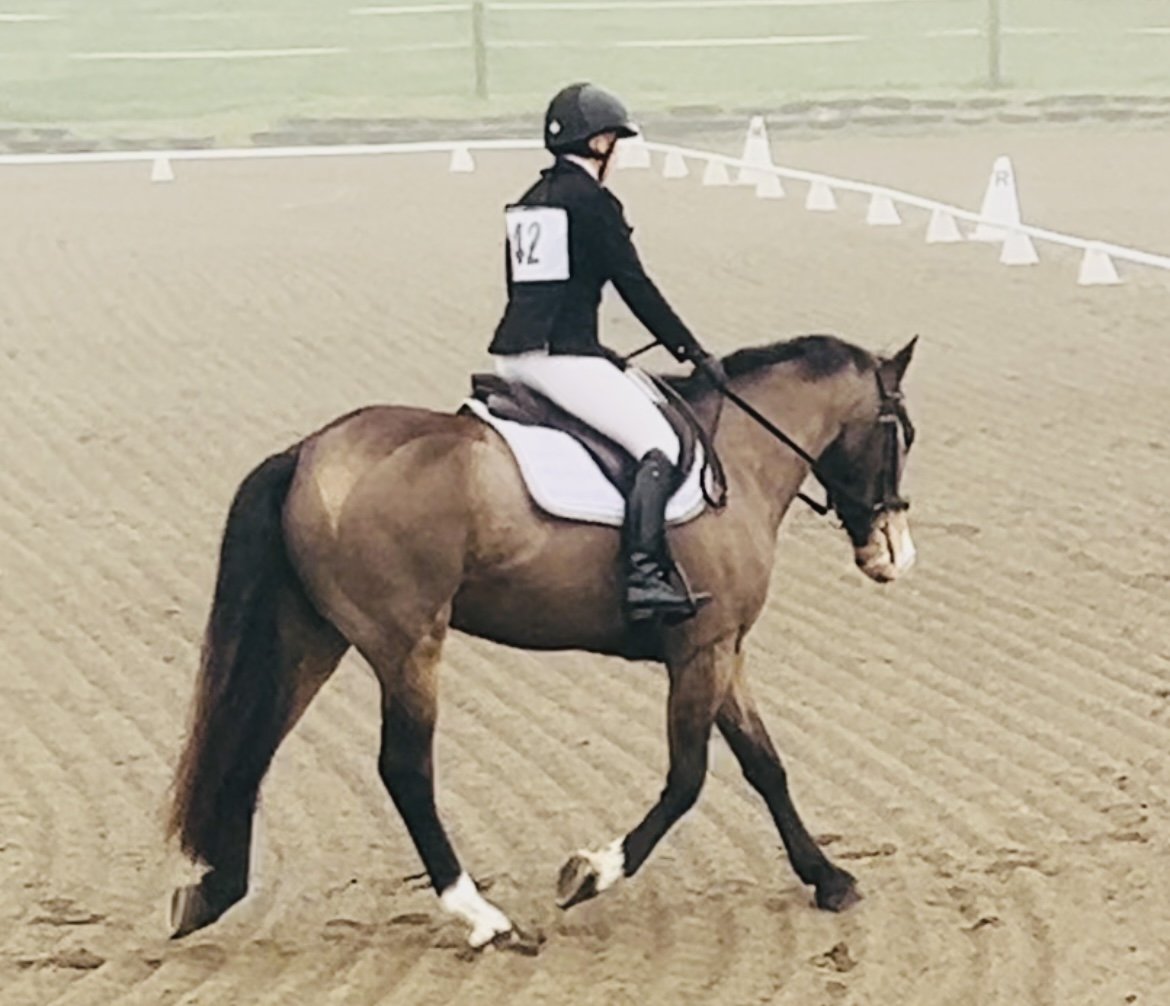
I had a couple of hours of driving on Sunday, coming home from coaching up North. Time to reflect on the lessons I'd taught, and time to celebrate the progress of these riders and all the other riders I get to work with, whether that's weekly, fortnightly, monthly or less frequently.
For me, every horse and rider combination is unique. They each have their own lived experiences that make them who they are. Sure, there are similarities, but there are often more differences.
I love that this allows me to be flexible in my coaching style, without compromising my ethics and values. Each combination giving me the opportunity to experiment, observe and adjust.
Does the rider understand what they're asking? Can they communicate that request clearly to their horse? Is the horse able to interpret the request, and are they ready, sufficiently coordinated and balanced to carry it out?
Sometimes the answer is a resounding YES from the horse. Sometimes we need to break things down into more bite-sized chunks, either for the rider or the horse. And sometimes the rider needs to take something away for homework because either the horse or the rider needs time to build coordination, agility or strength.
I was coaching a combination this morning that I've been working with for a while. Today, they produced an amazing working trot! But that didn't happen overnight. Both horse and rider needed time to build the right movement patterns, rather than developing patterns that involved one compensating for the other.
One of my core values is that the horse must not become collateral damage or the poor member of the partnership. Riders need to work on themselves so that they can enable their horses to shine. We shouldn't expect horses to compensate for a rider's lack of balance, coordination or stability, or have to work through unclear or conflicting aids to understand what is being asked of them. The rider needs to develop their own skills so they can communicate clearly and effectively, allowing the horse to understand and respond to the request. The rider needs to be prepared to work on themselves as much as, if not more than, they work on their horse. - I can help with that.
Progress is individual.

Progress happens during our lessons and continues between them as riders put into practice what we've discussed and worked on together. A big part of this is the feedback loop between the rider, the horse and me as their coach.
During a lesson, I'm helping the rider recognise the moment something changes, become aware of what feels different in their own body and what has changed in their horse. I'll often ask them to explain to me, in their own words, what they've noticed and what they did to create that change. This helps them make sense of the experience, rather than simply being told they've got it right.
For me, it is important that the riders understand the what, why and how of their practice. What are we working towards? Why is it important? And how do we go about developing it?
It's not just about knowing what to do, but also developing a feel for what is more functional, more useful in their own bodies, recognising when something feels different, and knowing what changes or responses to look for in their horses. Not all the weird feelings are wrong!
A rider can practise an exercise diligently, but if their understanding, feel or interpretation is incorrect, they can end up reinforcing the very movement pattern we're trying to change. That's why it's important to me that riders develop an understanding of what they're looking for, what they should be feeling and how to recognise when things are improving.
The more aware the rider becomes of what they've done, what it feels like and how their horse has responded, the more likely they are to recognise and repeat it. I want riders to be able to take that understanding away from the lesson and put it into practice when I'm not there in the arena with them.
Sometimes it's the smaller adjustments, the improved awareness and the ability to recognise how your horse is responding that make the difference.
Ultimately, we want to spend our time developing useful patterns and skills for both horse and rider, rather than inadvertently reinforcing something we're trying to change.
It's often in the smaller changes and the details that we see the real development, which is why learning to observe your horse and recognise those changes is so important."
The change in your horse's breathing. The way they carry their head and neck. The length of their stride. A blink, a wrinkle of the nose, or those little wrinkles above the eye.
These are all things worth noticing. Not every change is necessarily an improvement, but learning to observe gives us more information about how our horses are responding to what we're doing.
Small steps, filling in the foundations, create the opportunity for bigger steps later on.
We will always come back to the basics, but often with different eyes and different information. What we revisit today isn't necessarily what we worked on six months ago, because both horse and rider have developed and changed since then.
A good example of this is a rider I work with and her young horse. A while ago, we changed what and how we were working with him. It wasn't so much a step backwards as a step “sideways”. We were revisiting something that was, in essence, already trained, but this time our focus was on changing his experience of the work.
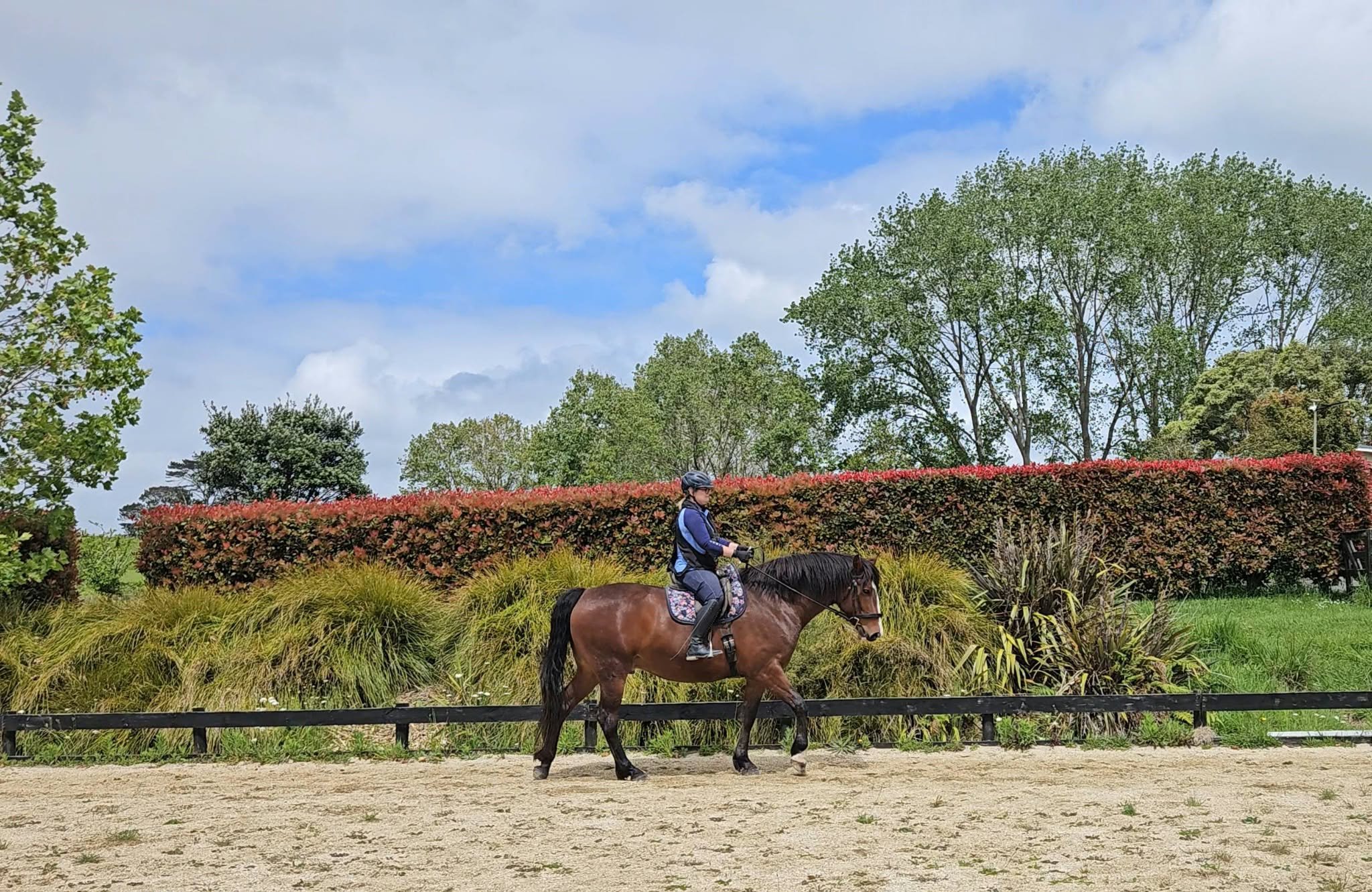
He had become “accustomed” to moving around the arena with a degree of tension and anxiety. Rather than continuing to work through that, we broke things down and went back to in-hand work. We spent time simply moving around the arena, observing his responses and learning to recognise the smaller signs that he was becoming anxious, rather than waiting until things escalated.
Changes in his head carriage, breathing and ear position all gave us information. We'd pause, perhaps walk a small circle, and give him time to process what was happening around him and within himself. The aim was to help him regulate his responses and develop a different experience of moving around the arena.
Just as importantly, the rider was learning to become more aware of her own responses. How was she reacting to the horse's anxiety? What was happening in her own body and nervous system? Could she recognise those responses and make adjustments herself?
There was learning for both horse and rider:
Recognising the early signs of anxiety in the horse.
Noticing their own nervous system responses.
Adjusting their own behaviour and handling.
Giving the horse time and space to process.
Observing whether the horse's responses changed.
By making these adjustments to our approach, we've been able to make better progress. The horse has had the opportunity to develop different responses, rather than repeatedly practising familiar patterns of tension and anxiety. The rider has also developed a better understanding of what to look for, when to pause and how her own responses influence the interaction.
It's a good example of why sometimes we need to change what we're doing, rather than simply keep practising what we've always done. Going back to the basics, or taking a step sideways, isn't losing progress. Sometimes it's exactly what we need to make better progress.
That's what I love about coaching. Every combination is different, every lesson gives me something to observe and consider, and there is always something more to learn, develop and improve.
It's not about how quickly we get there. It's about what we're building along the way, and making sure both horse and rider are better for it.
If the way I approach coaching resonates with you, and you'd like to develop a better understanding of your own riding, your horse's responses and how the two of you work together, I'd love to hear from you.
I work with riders in a variety of ways, from individual coaching and training through to online learning. I'm also developing a new online programme that will give riders the opportunity to explore some of these ideas, build their understanding and put them into practice with their own horses. More about that will be coming soon!
In the meantime, you can find out more about my coaching and services on my website, or simply get in touch if you'd like to have a chat about working together.
https://www.suepequestrian.co.nz/
or email sue@suepequestrian.co.nz