
Confidence, Competence and the Skills That Support Both
Many horse owners tell me they want more confidence.
But before we can build confidence, it is worth asking:
What is confidence?
And perhaps more importantly:
What is competence?
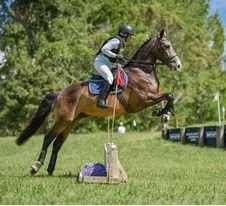
Here Garry is showing heaps more competence and confidence than me!
This blog was inspired by conversations I've been having with clients recently about confidence, competence, and resilience.
More specifically, we've been discussing whether they have enough resilience left in the moment to still have some brain space available.
Brain space to notice what is happening.
Brain space to think.
Brain space to make decisions.
Brain space to access the skills and competencies they already have and then take action.
Because when things start to unravel, whether that's at home, at a lesson, out hacking, or at a competition, it can sometimes feel as though all of our thoughts, feelings, and energy are being used simply trying to stay onboard.
Simply trying to survive.
And that's not a flaw.
That's not weakness.
That is your brain doing its job.
Your brain's primary role is to keep you alive.
When it perceives a threat, whether real or perceived, it will often prioritise survival over learning, problem-solving, or performance.
When that happens, it can be difficult to recognise what is happening, let alone decide what to do next.
The interesting thing is that many of these riders and handlers already have more skills than they realise.
The challenge isn't always a lack of knowledge or ability.
Sometimes the challenge is having enough resilience in the moment to access those skills when they are needed.
That got me thinking about the relationship between confidence, competence, and resilience.
How they influence one another.
And why a dip in confidence doesn't always mean we are lacking skill or going backwards in our learning.
For a long time, I thought confidence was something I either had or didn't have.
Like many horse owners, handlers, and riders, there have been times when I felt confident and capable, and other times when I questioned myself. Sometimes it was before a competition, sometimes when riding a young horse, and sometimes when faced with a situation that was just outside my current experience.
What I've come to realise through both my own riding and coaching is that confidence isn't usually the thing that's missing.
More often than not, a dip in confidence is simply showing us where we need more experience, more understanding, or another skill in our toolbox.
I've seen riders who describe themselves as lacking confidence become incredibly capable once they develop the skills they need. Equally, I've seen very capable riders experience a dip in confidence when they become aware of a gap in their knowledge or find themselves in a new situation.
Neither rider is failing.
They're simply at different stages of learning.
That's why, when a rider tells me they need more confidence, one of the first questions I ask is:
"What skill do you think is missing?"
Because confidence often grows naturally when competence grows alongside it.
What is confidence?
Confidence is the belief that you can cope with a situation.
It doesn't mean you never feel nervous, worried, or uncertain. In fact, confidence isn't the absence of those feelings.
Confidence is knowing that when something unexpected happens, you have the skills, knowledge, and experience to respond appropriately.
A confident handler or rider may still feel nervous before a competition, when riding in a new environment, or when faced with a challenge. The difference is that they trust their ability to handle what comes next.
What is competence?
Competence is having the skills, knowledge, and experience to perform a task effectively.
Competence is built through learning, practice, reflection, and repetition.
It is your ability to recognise what is happening, make decisions, and respond in a useful way for both you and your horse, whether you are handling them on the ground or riding.
The more competent you become, the more evidence you give yourself that you can cope.
And that is where confidence often grows.
What is resilience?
Resilience is your ability to recover, adapt, and continue moving forward when things don't go to plan.
It is what allows both you and your horse to come back from a moment of tension, confusion, or disruption and re-establish a place where learning can continue.
Resilience is not about things always going well.
It is about what you do next when they don't.
Let’s take a moment to dive into how we learn
The Four Stages of Learning
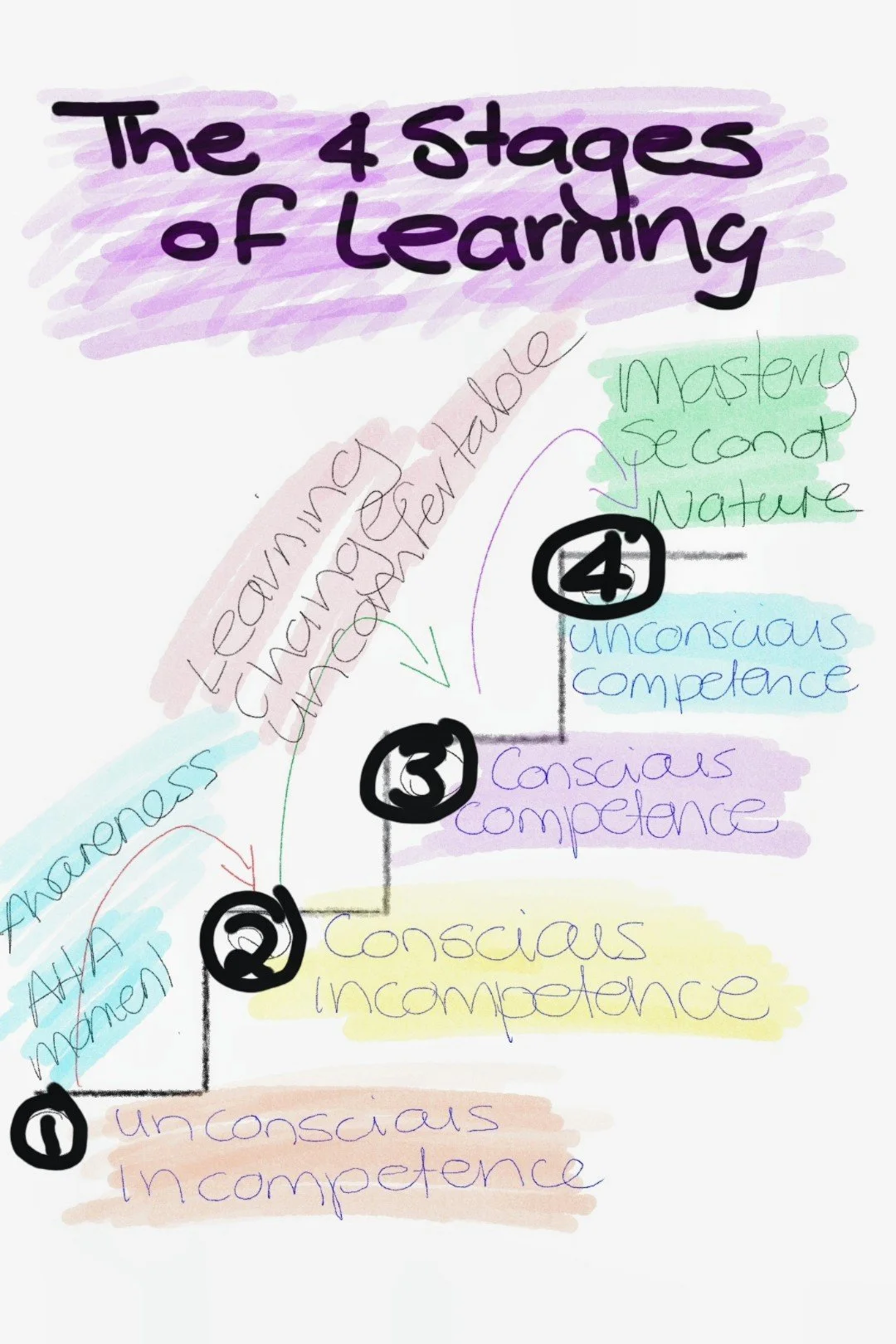
When developing any new skill, whether that's riding, training, jumping, managing your nerves, or helping your horse through a difficult situation, we typically move through four stages of learning.
Understanding these stages can help explain why confidence sometimes increases, decreases, and then increases again as we develop our skills.
1. Unconscious Incompetence
This is the stage where we don't yet know what we don't know.
Perhaps we've never encountered a particular challenge before, so we are unaware of the skills that may be required.
A rider or handler at this stage may feel quite confident simply because they haven't yet discovered the gaps in their knowledge or experience.
There is nothing wrong with this stage. We all start here.
The important thing is remaining open to learning.
2. Conscious Incompetence
This is the stage where we become aware of what we don't yet know or cannot yet do.
This can sometimes feel uncomfortable.
You may suddenly realise there is more to riding, training, handling, or understanding your horse than you previously thought.
You become aware of the skills you need to develop.
Ironically, this is often the stage where confidence takes a dip.
Not because you are getting worse, but because you are becoming more aware.
This awareness is actually a sign of learning.
3. Conscious Competence
At this stage, you can perform the skill, but it requires concentration and deliberate effort.
You know what to do, but you still need to think about it.
You may be able to recognise when your horse is becoming distracted, tense, or worried and choose an appropriate response, but it still requires conscious thought and decision-making.
This is where many riders and handlers spend a significant amount of time.
The more quality practice you get, the more reliable these skills become.
4. Unconscious Competence
This is where a skill becomes so familiar that you can perform it without having to think through every step.
For example, an experienced rider or handler may notice their horse losing focus, becoming worried, or drifting out of balance and make an adjustment almost automatically.
They aren't necessarily better because they never have problems.
They are often better because they recognise problems earlier and have practised solutions enough times that their response becomes natural.
That level of competence allows them to regain focus without missing a beat.
Why does this matter?
Understanding these stages can help us be kinder to ourselves when learning.
Many riders assume that feeling less confident means they are going backwards.
Often the opposite is true.
Sometimes a dip in confidence is simply the result of becoming more aware of what you need to learn next.
You have moved from unconscious incompetence into conscious incompetence.
That awareness creates the opportunity for growth.
As your competence increases through practice and experience, confidence often follows.
Rather than asking, "How do I become more confident?" it can be helpful to ask:
"What skill am I currently learning, and which stage of learning am I in?"
That question often provides far more useful answers.
Before We Go Any Further...
It is worth remembering that none of this applies only when we are in the saddle.
Confidence, competence, and resilience influence every interaction we have with our horses.
From the moment we enter their space.
When we catch them in the paddock.
Lead them.
Groom them.
Load them.
Train them from the ground.
Mount them.
And ride them.
The skills we develop and the way we respond in those moments all contribute to the relationship we build with our horse and our ability to influence one another positively.
What skill are you missing?
If confidence is built from competence, then it is worth asking yourself:
What skill or competency do I feel I am lacking right now?
Is it canter work?
Jumping?
Riding in open spaces?
Competition?
Hacking alone?
Loading?
Managing your own nerves?
Helping your horse when they become worried or reactive?
Sometimes we focus on "I need more confidence" when what we actually need is a specific skill.
The clearer you are about the skill you need, the easier it becomes to improve it.
Confidence isn't about controlling your feelings
When confidence wavers, many riders and handlers try to fight their thoughts and emotions.
I don't think we need to control them.
Our thoughts and feelings are feedback.
Sometimes that feedback is useful. It may be alerting us to a genuine risk or telling us that something needs attention.
The goal isn't to ignore the feedback.
The goal is to listen to it and then make a conscious decision about what to do next.
Can you stay in your stretch zone, where learning and growth happen?
Or are you and your horse moving into a panic zone where learning becomes difficult or even counterproductive?
Positive progress happens when we stretch ourselves and then return to a place where we can process, recover, and learn.
When things start to unravel
You and your horse are living, breathing, feeling beings.
Unexpected situations can arise at any time.
Perhaps you are riding a course of jumps and self-doubt starts creeping in.
Your heart rate increases.
Your focus narrows.
Your internal dialogue changes.
You stop riding the way you normally do.
Your horse notices.
To your horse, this change can be a signal that something isn't quite right.
They may become hesitant, tense, rush, back off, or become more reactive.
This is where competence becomes important.
What skills do you have that can help you regain focus?
Can you recognise what is happening early?
Can you slow things down before the situation escalates?
Maybe that means coming back to trot.
Maybe it means returning to walk or halt.
Maybe it is simply taking a moment to regroup and refocus.
The answer will depend on you, your horse, the situation, and your current level of skill and experience.
Give yourself something useful to do
One of the most effective things we can do is replace an unhelpful reaction with a useful action.
For example, one cue I often use for myself and my clients is:
Hands to mane.
This simple action interrupts the subconscious habit of pulling on the reins and gives both the brain and body a more useful task.
You might have your own cues or reminders.
The important thing is having practical tools available when things start to unravel.
If you don't have those tools yet, that may be the skill that needs developing.
Because if we stay stuck in worry, tension, or inaction, we are likely to keep producing the same outcome.
But if we notice the pattern and interrupt it with a more useful thought or action, we create the opportunity for a different result.
Be realistic
Sometimes a challenge appears that we didn't anticipate.
A horse may react differently in a new environment.
A behaviour may emerge that has never shown up at home.
Remember, for some horses, even a cone moved to a different location can change how they perceive their environment.
That doesn't mean you've failed.
It simply means you've discovered something that requires another skill, another strategy, or another layer of understanding.
Horses Are Trying to Stay Safe Too
It's also worth remembering that we aren't the only ones trying to stay safe.
Our horses are too.
Just like us, their nervous system is constantly gathering information from their environment and making decisions about what is safe, what isn't, and how they should respond.
When a horse becomes worried, reactive, tense, or distracted, they aren't necessarily trying to be difficult.
Often they are doing exactly what their brain and nervous system are designed to do.
Survive.
Whether we are handling them on the ground or riding them, our own competence, confidence, and resilience become incredibly important.
If we can maintain enough brain space to recognise what is happening, access our skills, and make useful decisions, we are in a much better position to help our horse.
Not by forcing them through the situation, but by helping them find their way back to a place where thinking, learning, and positive progress can happen.
How horses build confidence, competence, and resilience is a topic worthy of its own discussion, but for now it is enough to recognise that both horse and human are learning to cope with challenges and develop the skills needed to navigate them.
How strong is your toolbox?
Ask yourself:
How much resilience do I have?
How many practical skills do I have available when things don't go to plan?
How much of my horse's adrenaline, anxiety, or nervous system response can I comfortably manage?
Can I help my horse return to a state where their mind and body are with me?
Do I have tools that help both of us come back into the present moment?
Sometimes your response may be to pause, regroup, and try again.
Sometimes the safest and wisest decision is to get off before the horse makes that decision for you.
There is no shame in that.
In some situations, getting off allows you to stay safe, help your horse return to a calmer state, and continue building confidence and competence from the ground.
That's being off in a good way rather than off in a bad way.
Building Confidence for Both Horse and Human
Confidence grows when we repeatedly experience challenges that we can successfully navigate.
Competence gives us the tools.
Resilience helps us recover when things don't go to plan.
Together, they help both horse and human learn that they can cope.
The goal isn't perfection.
The goal is to keep building skills, improving communication, and expanding what both you and your horse can comfortably handle.
Practised, but not drilled.
Challenged, but not overwhelmed.
Progressive, sustainable learning for both horse and human.
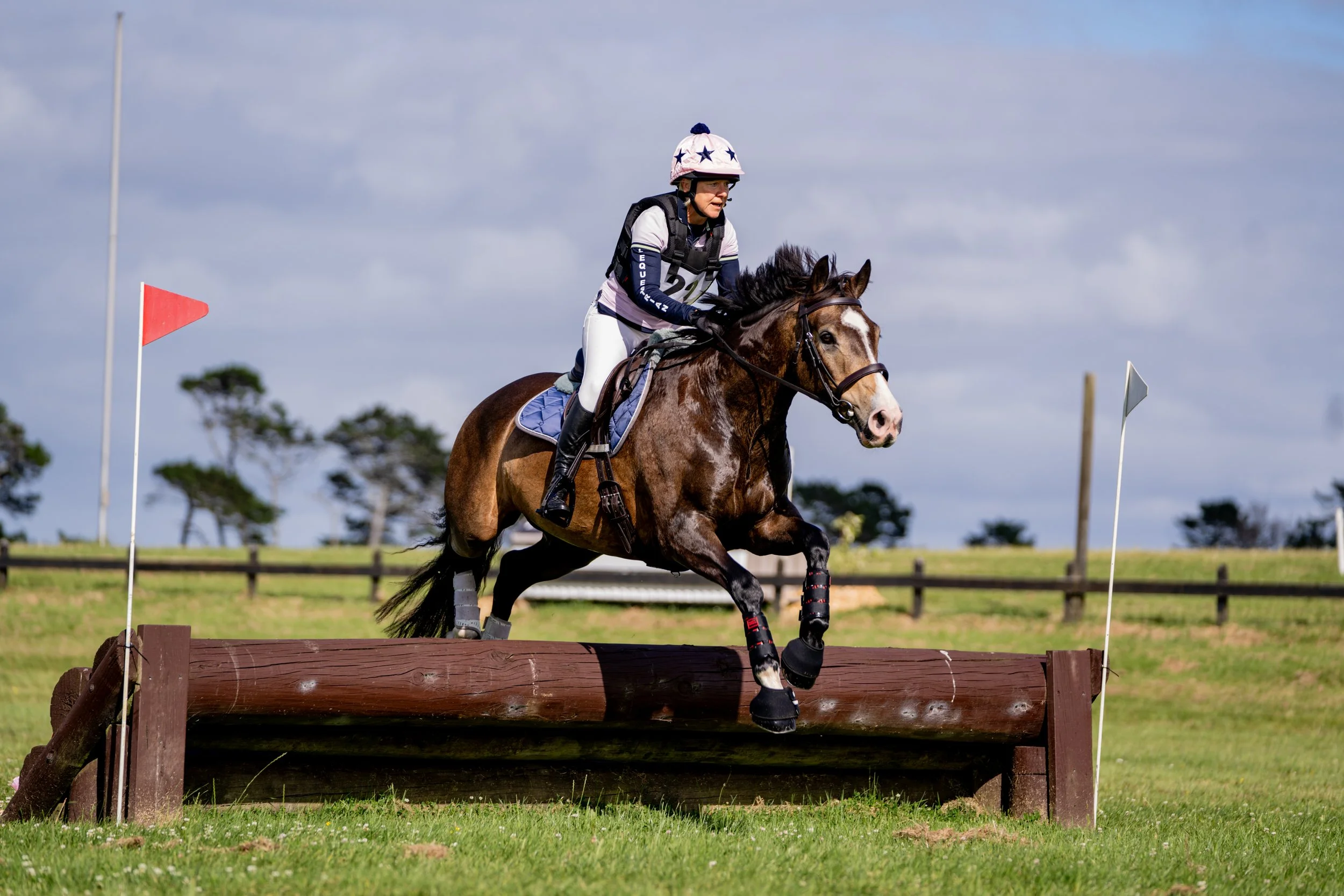
Horse and rider a more harmonious combination - competencies and therefore confidences more aligned!